
If your BMW is sitting low, throwing a suspension warning, or the compressor won't stop running, the air suspension is almost certainly asking for attention. Here's what's usually going on and what your repair options are, in plain terms.
Quick answer: BMW air suspension most often fails because an air spring (the rubber bellows) cracks and leaks, which then overworks and burns out the compressor. Typical signs are a corner or the rear sitting low, a suspension warning message, a compressor that runs a lot, and a bumpy ride. Fixing it early is cheaper, and you aren't limited to genuine BMW parts — quality aftermarket air springs such as Arnott fit the same cars for noticeably less.
What is BMW air suspension?
Instead of regular steel springs, some BMWs use rubber air springs (bellows) that the car inflates or lets down to keep a level ride and handle heavy loads. A small compressor, some valves and height sensors run the system. It is commonly found on the X5 and X6, the 7 Series, and the 5 Series Touring and Gran Turismo, usually at the rear, and on some models at the front as well. It's worth checking what your specific car has, since many were optional.
Signs your BMW air suspension is failing
- One corner, or the whole rear, sits lower than normal, especially after parking overnight
- A suspension, ride-height or chassis warning on the dash
- The compressor running often, for a long time, or loudly
- A bouncy, floaty or harsh ride
- The car takes a long time to rise after you start it, or never reaches its normal height
What usually goes wrong
The most common cause is a cracked or worn air spring that leaks. The compressor then has to run far more than it was designed to, and eventually burns out. That is why a small leak caught early is much cheaper than waiting. Less often, the problem is a leaking valve block, a ride-height sensor, or an air line.
Your repair options (and how to keep the cost down)
- Genuine BMW parts. The most expensive route, and the one a dealer will usually quote.
- Quality aftermarket air springs, such as Arnott. These are not original BMW parts, but they are a well-known replacement designed to fit the same cars, and they typically cost noticeably less than genuine. For most owners who plan to keep the car, this is the best balance of cost and reliability.
- Replace in pairs where it makes sense. When one air spring has failed, the one on the other side is the same age. Replacing both together avoids paying for the same labour twice.
- Check the compressor at the same time. If it has been running overtime because of a leak, it may be worn, and it's cheaper to know before it fails.
We'll go over the options with you before any work starts, so you can decide what fits your car and your budget. Wondering how this compares to a dealer quote? See our independent shop vs. dealership comparison, or read about the Mercedes equivalent, Airmatic and ABC. For more on what we do, see our BMW & MINI repair page.
A recent example: 2018 BMW X5 with a sagging rear
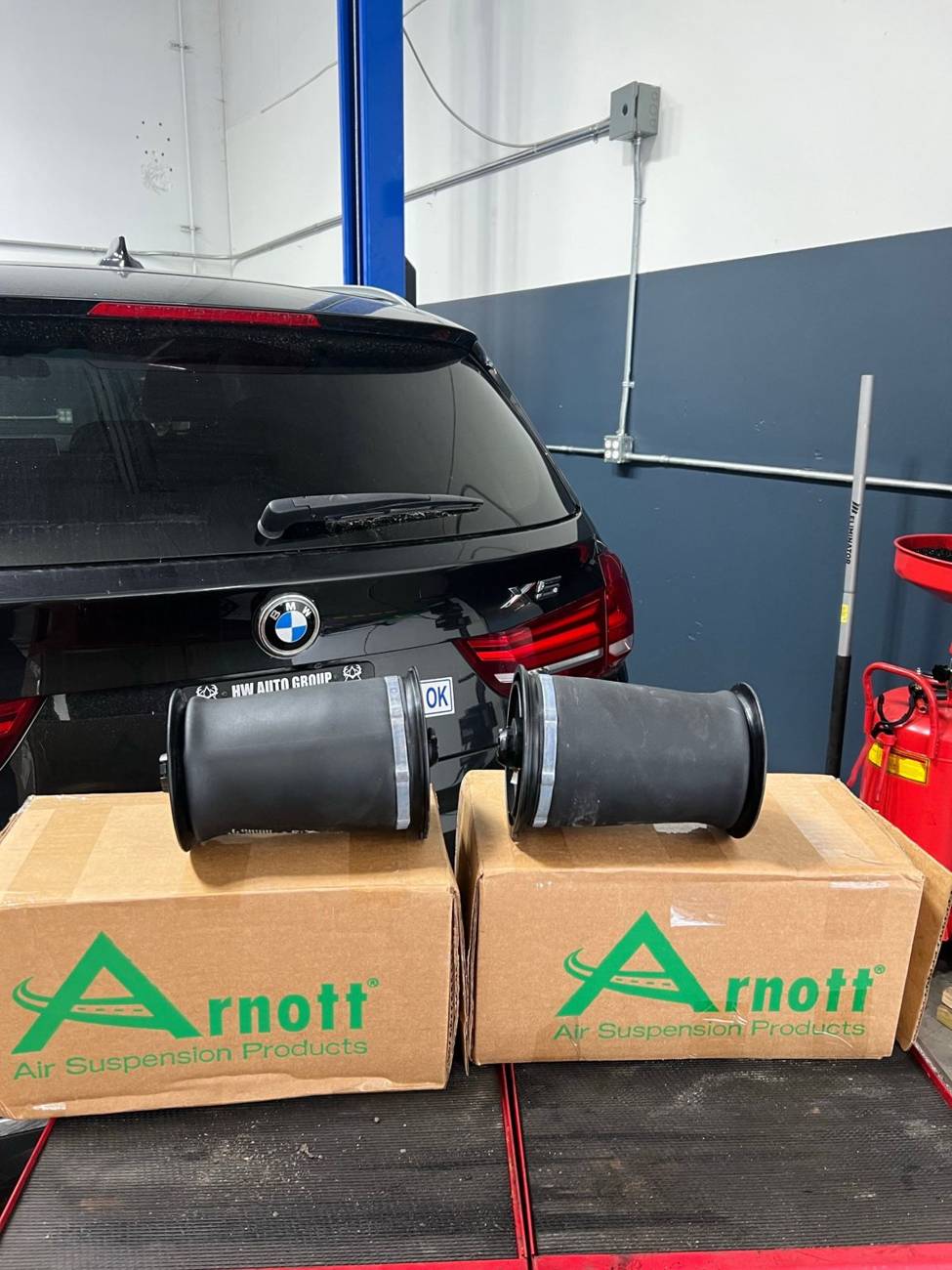
This 2018 X5 came in with the rear sagging. The owner had the rear air springs replaced before the compressor gave out, which is the best-case outcome: the leak is fixed, and the compressor never had to take the strain. We used Arnott air springs on this one.
Frequently Asked Questions
What are the signs of a bad BMW air suspension?
The car sits low at one corner or at the rear (especially after parking overnight), a suspension or ride-height warning appears on the dash, you hear the compressor running often or for a long time, the ride feels bouncy or harsh, or the car won't rise to normal height after you start it.
Which BMWs have air suspension?
It is common on the X5 and X6, the 7 Series, and the 5 Series Touring and Gran Turismo, usually at the rear and on some models at the front too. Many are optional, so the quickest way to know is to check the car or ask us with your VIN.
What usually goes wrong with BMW air suspension?
Most often an air spring (bellows) cracks with age and leaks. Left alone, the compressor works overtime to keep up and can burn out. Less often, a leaking valve block, a ride-height sensor or an air line is the cause.
Do I have to use genuine BMW parts to fix air suspension?
No. Genuine BMW parts are the most expensive option. Quality aftermarket air springs such as Arnott are designed to fit the same cars and usually cost noticeably less. We'll explain the options and let you choose.
Is it safe to drive with a leaking air spring?
A slow leak is usually drivable for a short time, but a car that is sitting very low can scrape, handle poorly, and wear tires unevenly. The bigger risk is the compressor burning out, which turns a smaller repair into a bigger one, so it's best to book it in promptly.
Can air suspension be replaced with regular springs?
On some models a conversion to coil springs is available. It removes the air system but changes how the car rides, and on some cars it affects adjustable or self-levelling features. Whether it makes sense depends on the car, so ask us before deciding.