
Ask almost any car shopper what feature they refuse to live without, and Apple CarPlay or Android Auto is near the top of the list. It's become less of a nice-to-have and more of an expectation — and for owners of older vehicles, that expectation often turns into a false assumption: that getting it means buying a new car.
Why It's Become Non-Negotiable
The appeal comes down to two things: convenience and safety. On the convenience side, CarPlay and Android Auto put your maps, music, messages, and calls on your car's own screen, using the apps you already know instead of a manufacturer's infotainment software that might be clunky, dated, or unfamiliar. There's no learning curve — if you know how to use your phone, you already know how to use the car's display.
The safety case is just as strong, if not stronger. Both systems are built around large, simplified interfaces and voice control specifically designed to keep a driver's eyes up and hands on the wheel. Instead of glancing down at a phone propped in a cupholder or fumbling to change a song, the controls are integrated into the dashboard where they belong. For a lot of drivers, this alone is worth the upgrade.
You Don't Need a New Car to Get It
This is the part most owners don't realize: if your car doesn't have CarPlay or Android Auto built in, that doesn't mean you're stuck without it. We offer CarPlay and Android Auto retrofit — adding this functionality to a vehicle that didn't originally come with it, without needing to trade in a car you otherwise like just to get a feature that's often a fraction of the cost to add on.
The Sweet Spot: Vehicles From the Mid-2010s
Apple CarPlay launched in 2014, with Android Auto following in 2015. Manufacturers didn't adopt either instantly — plenty of vehicles built between roughly 2014 and 2018 shipped with infotainment hardware that was already close to CarPlay- and Android Auto-capable, even though the feature wasn't switched on or included at the time. In many of these cases, the existing screen, wiring, and control module are already most of what's needed. The retrofit can be as simple as a software or firmware update, or a minor hardware addition, rather than tearing out and replacing the entire infotainment system.
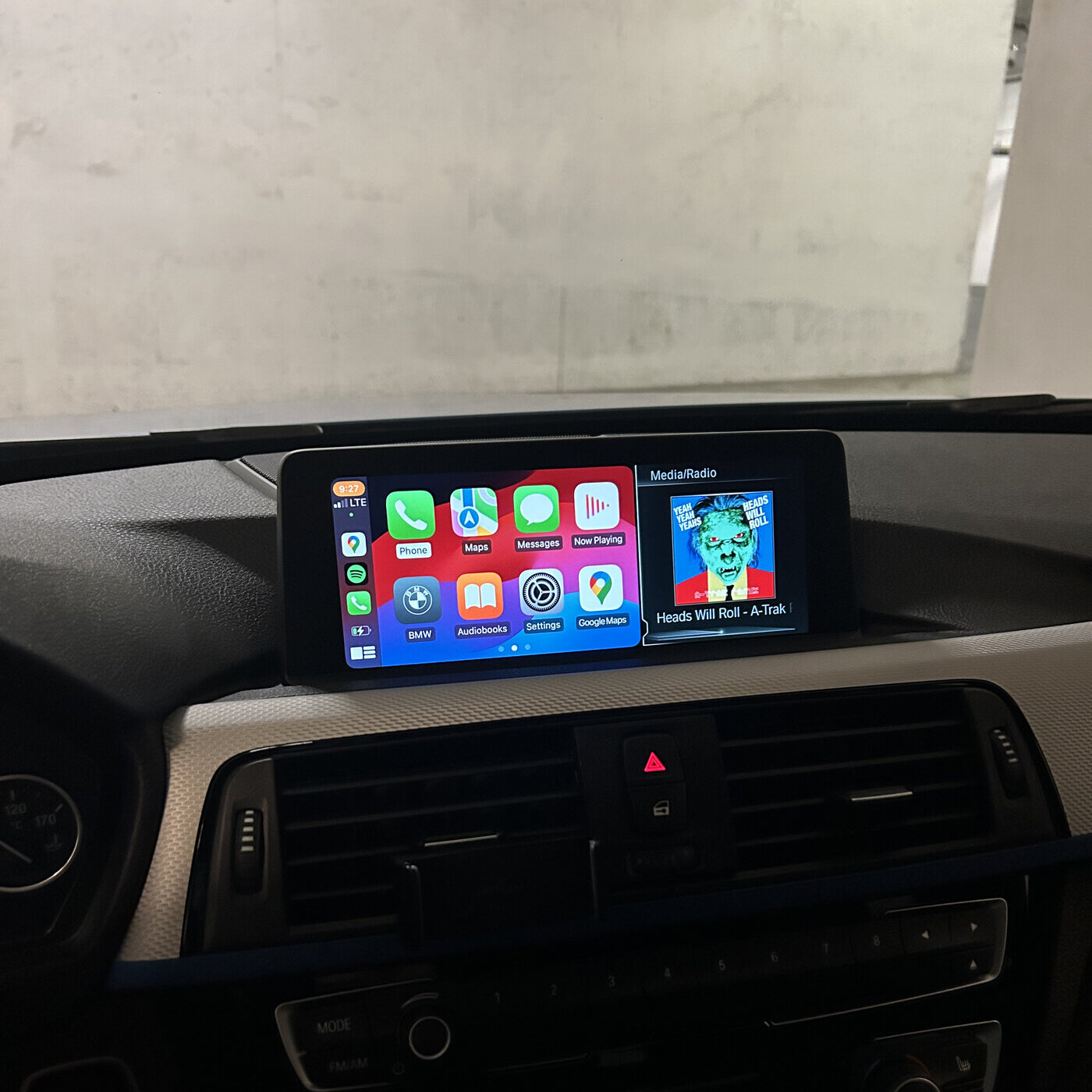
A good example: many BMW models from 2017 already came with the head unit needed to support CarPlay — it just wasn't switched on from the factory. For these vehicles, retrofitting is often as simple as adding a WiFi antenna and performing a software update, rather than replacing any of the underlying hardware.
This isn't universal — every make and model is different, and some systems need more work than others to get there. But it's common enough that it's always worth checking before assuming a full system replacement (or a new car) is the only path.
What a Retrofit Actually Involves
- A compatibility check. We look at what your car already has — the existing head unit, wiring, and software version — to determine the simplest path to get CarPlay or Android Auto working.
- Software or firmware updates where supported. Some systems just need to be updated or unlocked to enable functionality that's technically already there.
- A retrofit module or interface where needed. For systems that need more than a software update, a properly integrated retrofit kit can add the functionality while keeping your factory look and controls intact.
- A clean, factory-look result. The goal is always a finished product that looks and feels like it came from the manufacturer — not an aftermarket screen bolted to your dash.
If you've been putting off replacing a car you otherwise like just to get CarPlay or Android Auto, it's worth a conversation first. The hardware in your dash might already be closer to ready than you think.