
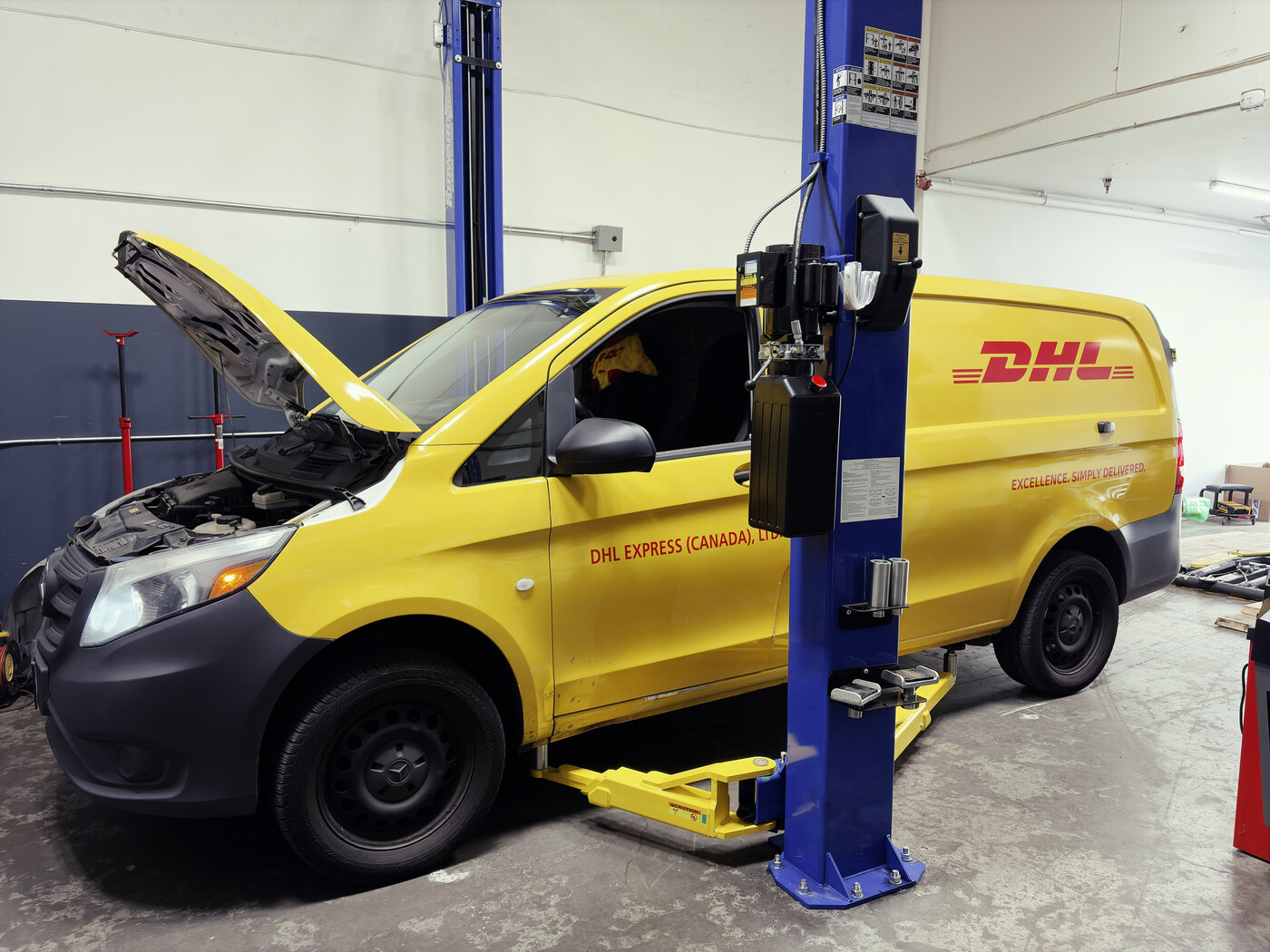
We recently had a Mercedes Metris come in with roughly 360,000 km on the clock, driven daily as a delivery vehicle. The dealer had quoted the owner almost $15,000 for the repair. We did the same job — done right — for a fraction of that. Here's what was actually going on under the timing cover, and why it matters for anyone running one of these vans for work.
Warning signs to watch for
Timing chain and phaser wear rarely shows up out of nowhere — there are usually warning signs for a while before a failure becomes serious. The three most common:
- Long crank time. If the engine takes noticeably longer to start than it used to — cranking for a couple of extra seconds before it catches — that's often one of the earliest signs. A stretched chain and worn tensioner take a moment to build the correct tension and oil pressure before everything is properly seated, delaying startup.
- A clanking or rattling noise on startup. A slack chain slapping against the timing cover or guides is most noticeable in the first second or two after startup, before oil pressure builds and takes up the slack. If that noise goes away once the engine's running, it's easy to dismiss — but it's usually a sign the chain and guides are already past due for attention.
-
Engine codes. Camshaft or crankshaft position correlation codes, cam phaser solenoid codes, and general misfire codes are all common once the timing has drifted enough to affect how the engine actually runs. The most common codes we see with this specific failure:
- P0016 — Crankshaft Position–Camshaft Position Correlation (Bank 1, Sensor A/Intake). The classic signature of chain stretch, a worn phaser, or a shifting reluctor (trigger) wheel.
- P0017 — Crankshaft Position–Camshaft Position Correlation (Bank 1, Sensor B/Exhaust). The same fault, exhaust side.
- P0341 — Camshaft Position Sensor Range/Performance.
- P0366 — Camshaft Position Sensor Circuit/Signal (Bank 1, Sensor B). P0341 and P0366 are frequently logged after harness contamination from oil sludge, or after other secondary work has disturbed a connection.
Any one of these on its own is worth having looked at. All three together — as was the case on this Metris — usually means the issue has been building for a long time.
What timing chain stretch actually means
Despite the name, a timing chain doesn't "stretch" the way a rubber band does. What actually happens is that the pins and bushings connecting each link wear down over tens of thousands of kilometres, and that wear adds up across the full length of the chain. The cumulative effect is a chain that sits looser than it should, even though no individual link has physically elongated. A looser chain means the crankshaft and camshafts fall slightly out of their intended timing relationship — and on a modern direct-injection engine, that timing precision matters far more than it did on older, simpler engines.
Timing chain guides: the part that usually fails first
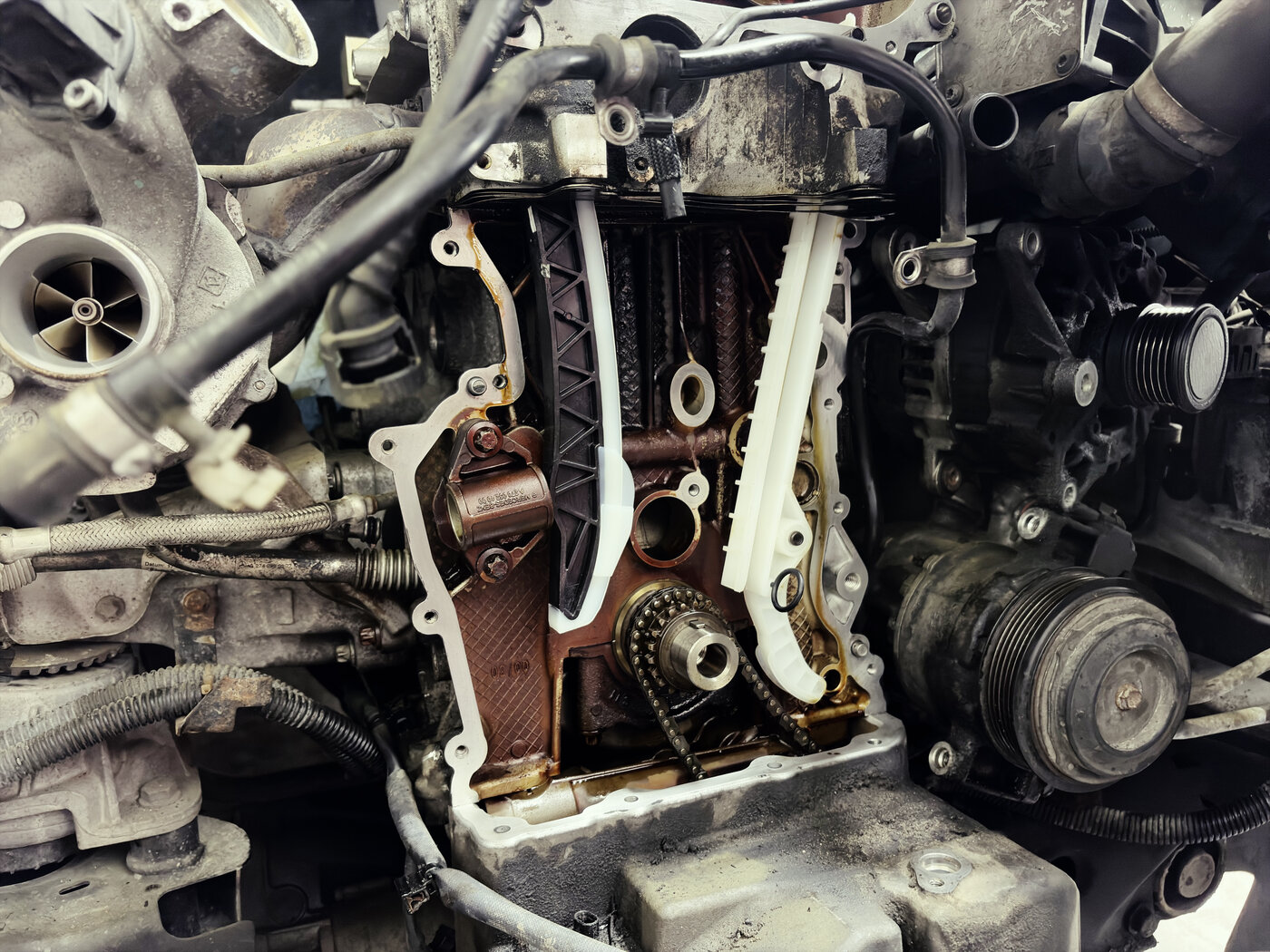
The chain itself is only part of the story. Plastic guides and tensioner rails keep the chain riding correctly as it loops around the sprockets, and these guides take on more load as the chain loosens with wear. Over enough time — especially combined with poor lubrication — the guides crack, wear through, or break outright. Once a guide fails, the chain can slap against the timing cover or skip teeth on the sprocket entirely. That's the point where a manageable maintenance item turns into a serious engine problem.
Cam phasers out of alignment
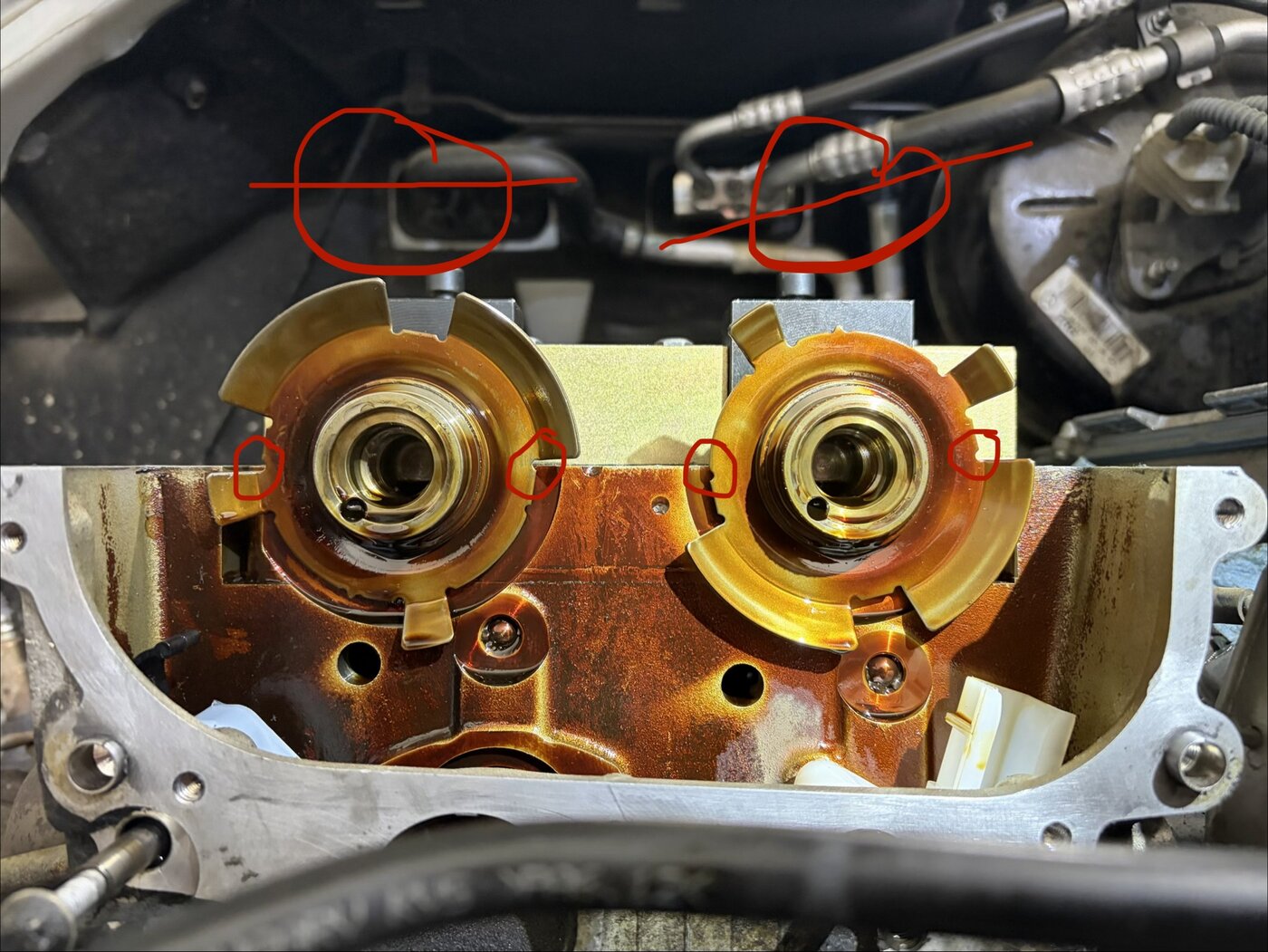
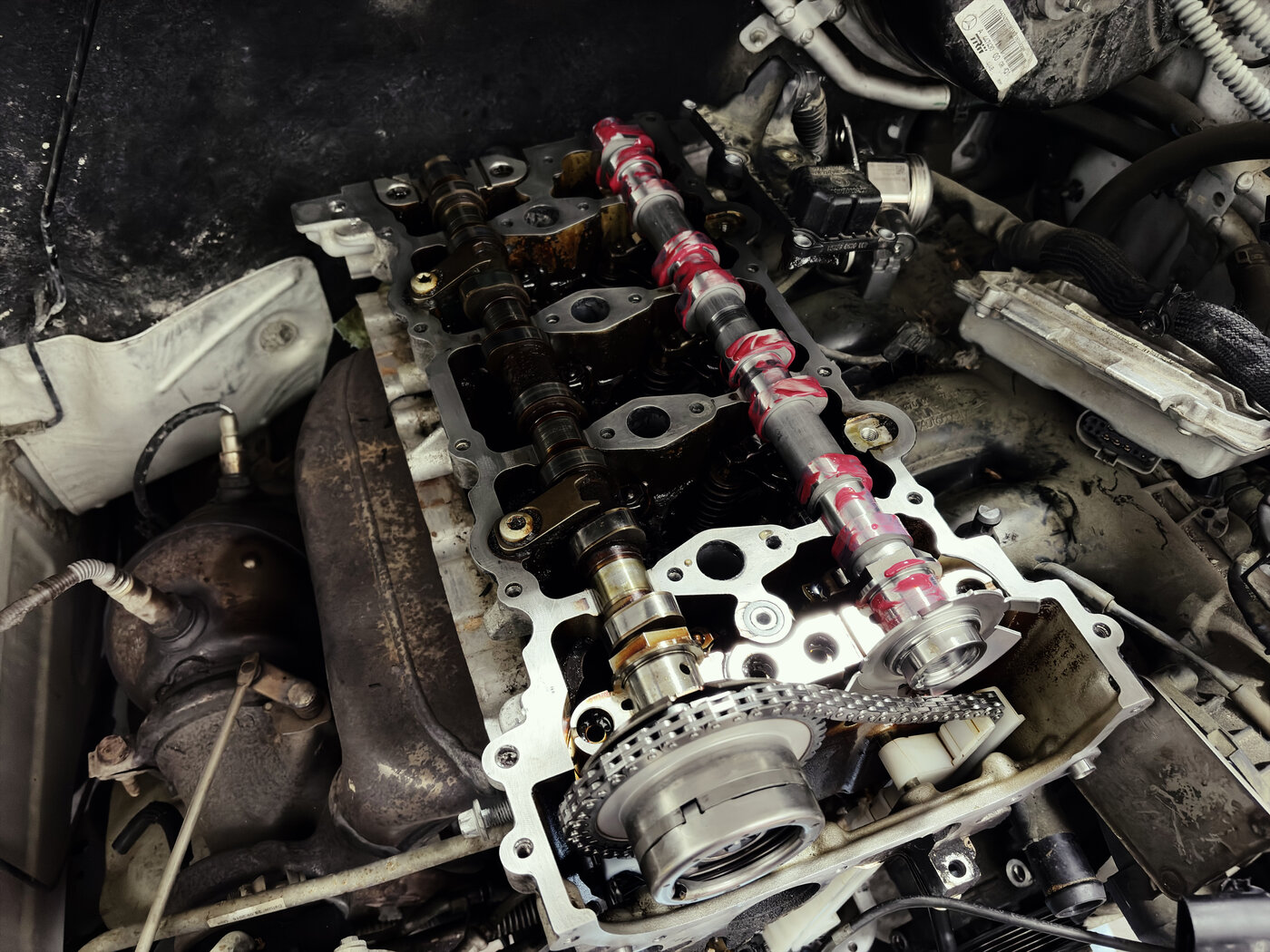
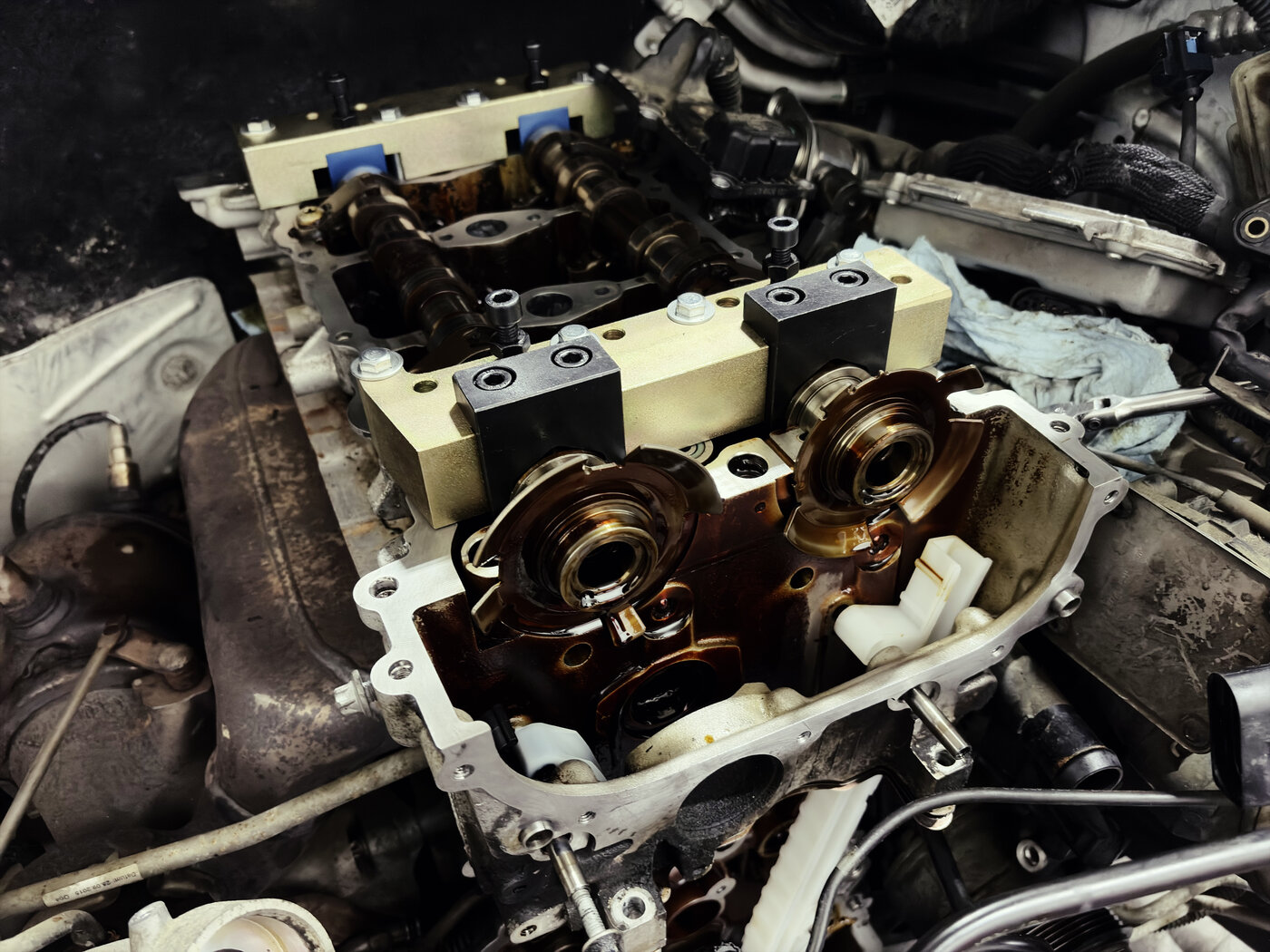
Modern Mercedes engines use variable valve timing, controlled by cam phasers that adjust camshaft position on the fly using engine oil pressure. When a timing chain has stretched and the guides have worn, the whole system loses the precision it was designed around — and the phasers are often the first place that shows up as a drivability problem. An engine with phasers out of alignment can idle roughly, hesitate under load, throw camshaft or crankshaft correlation fault codes, or rattle noticeably on cold startup before oil pressure builds. On this Metris, the phaser timing had drifted well outside spec by the time it came in — a direct downstream effect of the chain and guide wear. On teardown, only one of the two camshafts actually needed to be replaced, which meant this particular repair didn't need the full expense of replacing both — part of why the total cost came in well under the dealer's quote.
The root cause: oil change intervals
Everything above is accelerated dramatically by neglected oil changes. Look closely at the sludge and varnish buildup in the photo below — that's not from one or two missed oil changes. That's the result of oil being run well past its usable life, repeatedly, over a long period. Old, degraded oil doesn't lubricate the chain and guides properly, and it doesn't flow cleanly through the small oil passages that feed the cam phasers. Those passages are narrow by design, and they're the first thing to suffer when oil breaks down or carries contamination. A timing chain and guide set that might comfortably last the life of the engine under proper maintenance can wear out well ahead of schedule when oil changes are stretched too far or skipped.
Your work vehicle is one of your most important tools
For anyone running a Metris, Sprinter, or any vehicle for work — whether it's a single van or a small fleet — it's worth thinking about the vehicle the same way you'd think about any other piece of equipment your business depends on. A contractor wouldn't run a compressor or a piece of shop equipment into the ground without maintenance and expect it to hold up; a delivery vehicle isn't any different. It's earning money every day it's on the road, which makes it one of the highest-value assets in the business, not just a cost.
Downtime costs more than servicing does
The real cost of a failure like this was never just the repair bill. A commercial vehicle sitting in a shop for days isn't making deliveries, isn't generating revenue, and — depending on the business — may mean scrambling for a rental or a backup vehicle in the meantime. A scheduled oil change and inspection costs a fraction of that, takes a fraction of the time, and is entirely predictable. Staying ahead of maintenance isn't just cheaper in parts and labour — it's cheaper because it never takes the vehicle off the road unexpectedly in the first place.