
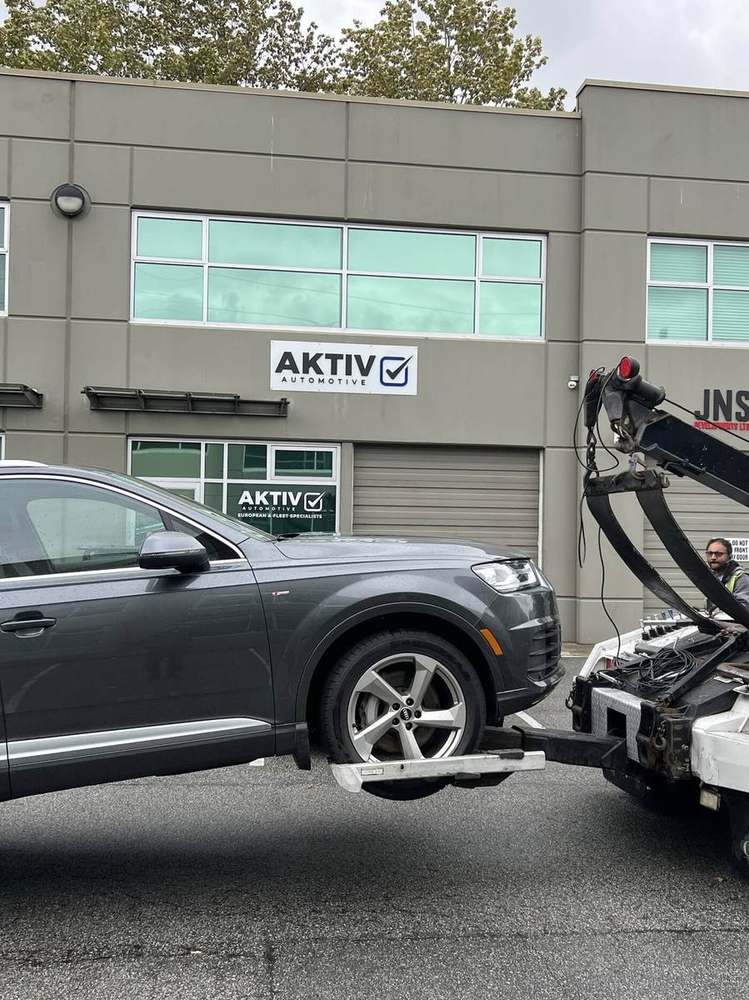
A 2018 Audi Q7 came to us recently with two complaints that seemed unrelated at first: a rough-running misfire, and oil disappearing faster than it should between changes. Both turned out to have the same root cause — a failed PCV system. This isn't a Q7-specific issue; the same failure pattern shows up across a wide range of Audi models.
Quick answer: Misfires paired with rising oil consumption on an Audi are frequently the same root cause: a failed PCV (positive crankcase ventilation) system pulling oil into the intake, where it fouls spark plugs and coils. This shows up across Audi's four-cylinder turbo engines (A3, A4, A5, Q3, Q5) and V6 engines (Q7, A6, A7) alike. The fix means replacing the PCV system along with any plugs or coils it has already fouled — not just swapping ignition parts and hoping.
What the PCV system actually does
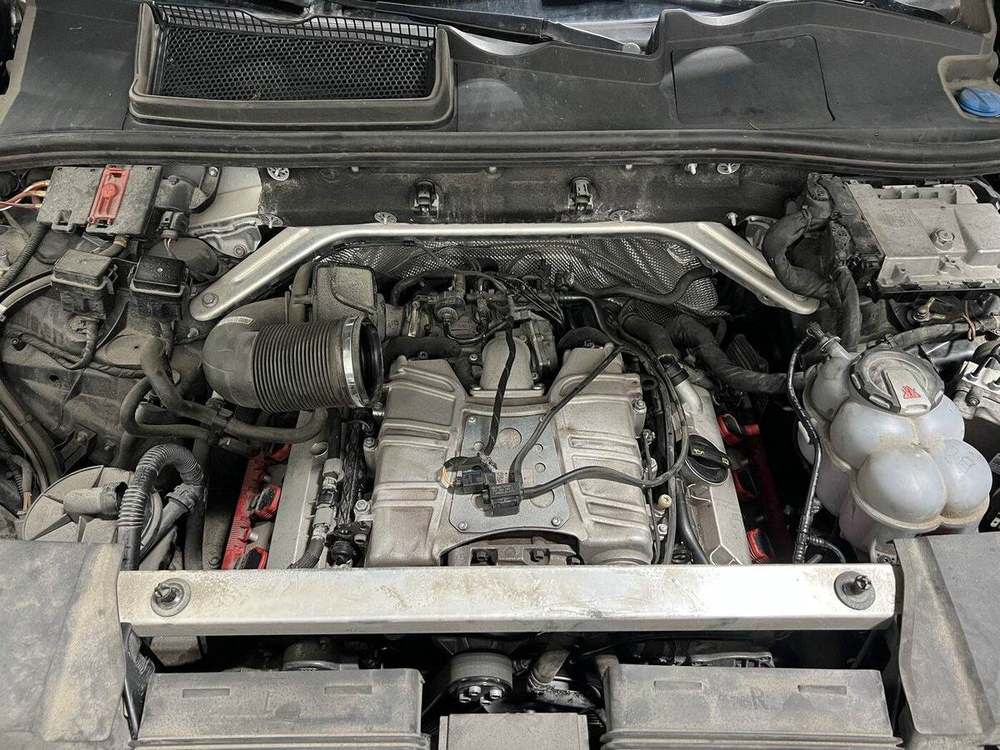
Every running engine has some amount of "blow-by" — combustion gases that leak past the piston rings into the crankcase. The Positive Crankcase Ventilation (PCV) system exists to manage that: it routes those gases back into the intake to be burned, rather than letting pressure build up inside the engine. A PCV valve or diaphragm regulates that flow and keeps crankcase pressure within a normal range. When it fails, the whole balance of the system breaks down.
How a failed PCV system causes oil consumption
When the PCV valve or diaphragm fails — most commonly by sticking, tearing, or clogging — crankcase pressure stops being regulated correctly. In many failure modes, this creates excess vacuum that pulls oil vapor (and sometimes liquid oil) into the intake tract along with the blow-by gases it's supposed to be managing. That oil doesn't get captured or returned to the sump — it gets drawn straight into the combustion chamber and burned along with the fuel. The result is oil consumption that climbs well beyond what's normal, often with no visible external leak to point to. It's an internal problem, which is exactly why it's easy to miss during a routine inspection.
Fouled plugs and coils: the downstream damage
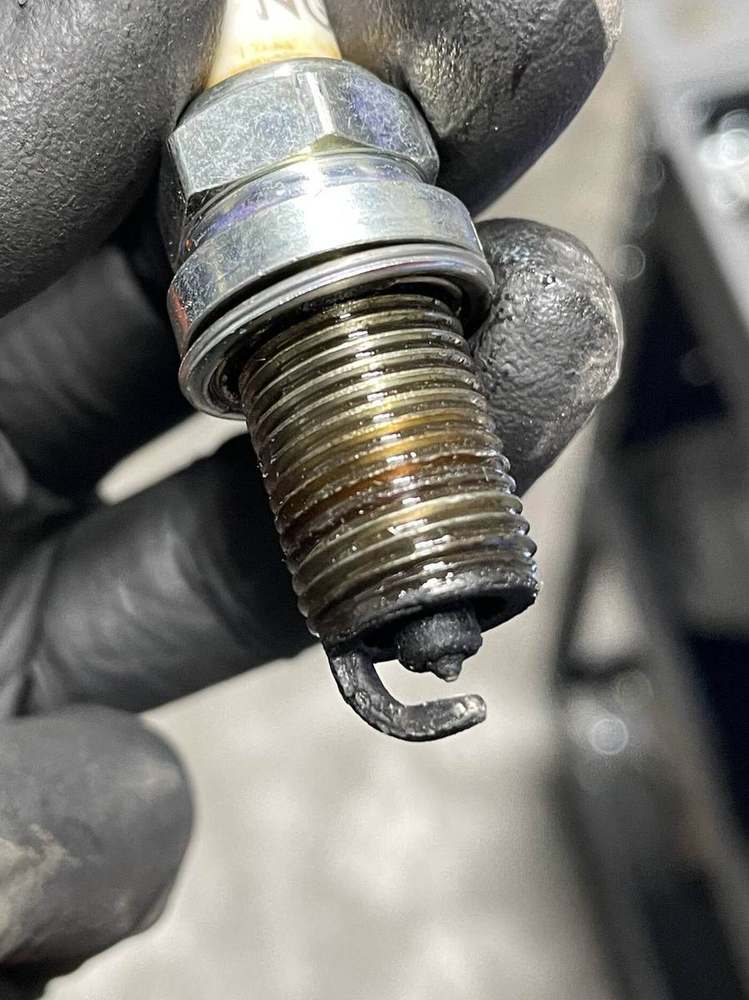
Oil being pulled into the combustion chamber doesn't just burn cleanly — it leaves residue. Spark plugs are especially sensitive to this: oil coating the electrode and insulator interferes with a clean, consistent spark, and over time the plug becomes visibly fouled with oily deposits. On this Q7, the plugs were coated badly enough that misfiring was inevitable regardless of anything else going on with the engine. The ignition coils weren't spared either — oil contamination around the plug wells had already begun affecting them, which meant the fix wasn't just a PCV repair on its own. Plugs and coils that have been fouled this way don't reliably recover once the root cause is fixed; they need to be replaced alongside it.
Worth noting: a leaking valve cover gasket can produce a similar result — oil dripping directly down into the spark plug wells will foul plugs and coils just as effectively as oil pulled in through the intake. It's a different mechanism (an external leak rather than internal consumption through the PCV system), and on some engines it plays a real contributing role. But it's not always the main cause, and replacing a valve cover gasket without checking the PCV system first can mean missing the actual source of the problem. Both are worth checking whenever plugs or coils turn up oil-fouled.
Why this shows up as a misfire
A fouled plug can't deliver a clean, consistent spark, and a coil that's been compromised by oil contact doesn't reliably deliver the voltage the plug needs in the first place. Either one on its own can cause a misfire; the two together make it close to guaranteed. This is exactly why diagnosing a misfire as "just a bad coil" or "just a worn plug" without asking why they failed can lead to replacing the same parts again a few months later — if the PCV system that caused the fouling in the first place isn't addressed, new plugs and coils will eventually end up in the same condition.
This isn't just a Q7 problem
The same failure pattern — PCV valve or diaphragm failure leading to oil consumption, fouled plugs, and misfires — shows up across a wide range of Audi engines, from the four-cylinder turbo engines in models like the A3, A4, A5, Q3, and Q5, to the V6 engines used in larger models like the Q7, A6, and A7. If you're noticing oil disappearing faster than usual, a rough idle, or a misfire that keeps coming back after a plug and coil replacement, the PCV system is worth checking regardless of which Audi you're driving.
Getting it right the first time
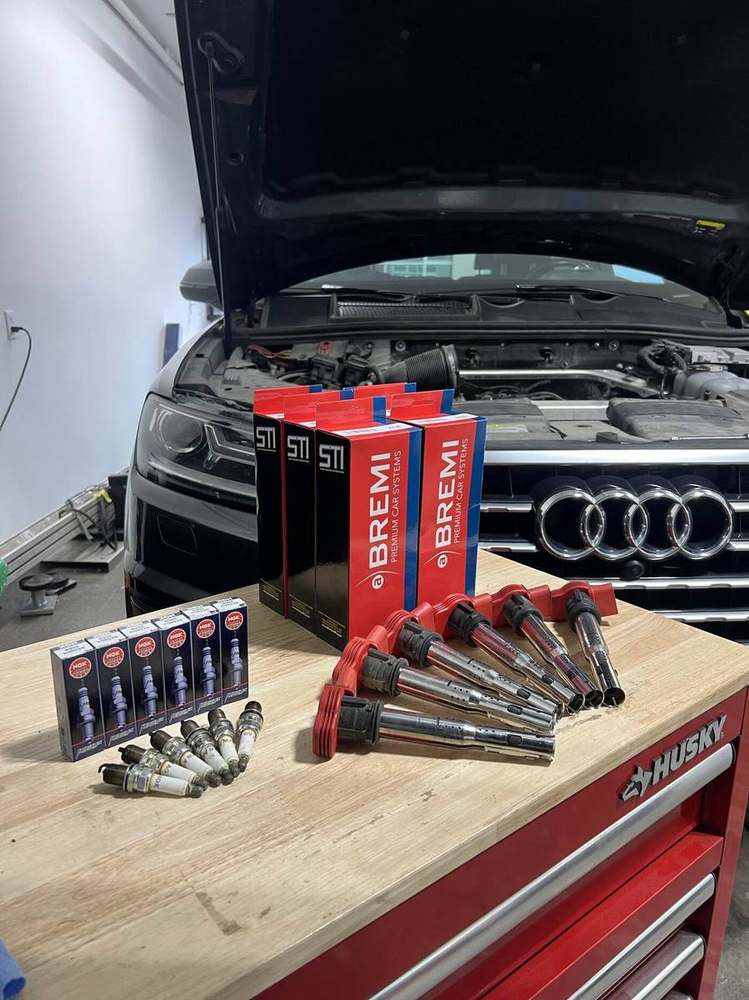
The repair here wasn't just one part — it was addressing the actual cause (the PCV system) along with the parts it had already damaged (the plugs and coils). Fixing only the symptom would have meant a comeback misfire within weeks. Catching oil consumption and misfires early, before they've had time to foul additional components, keeps a repair like this smaller and cheaper than letting it run its course.
Frequently Asked Questions
What causes an Audi to misfire and burn oil at the same time?
In most cases it's a failed PCV system pulling oil vapor into the intake, which gets burned in the combustion chamber — raising oil consumption and fouling spark plugs and coils until they misfire.
Which Audi models are affected by PCV system failure?
This shows up across Audi's four-cylinder turbo engines (A3, A4, A5, Q3, Q5) and the V6 engines in larger models (Q7, A6, A7) — it isn't limited to one model or body style.
Can a valve cover gasket cause the same oil-fouling symptoms?
Yes. A leaking valve cover gasket can drip oil directly into the spark plug wells and foul plugs and coils externally, which looks similar to PCV-related fouling but has a different cause. Both are worth checking.
Do oil-fouled spark plugs and coils need to be replaced, or just cleaned?
Once plugs and coils have been fouled by oil this way, they typically don't reliably recover and need to be replaced alongside the PCV repair, or the misfire returns.
Is it okay to just replace the spark plugs and coils without fixing the PCV system?
No — if the PCV system that caused the fouling isn't addressed, new plugs and coils will eventually end up oil-fouled again in the same way.